
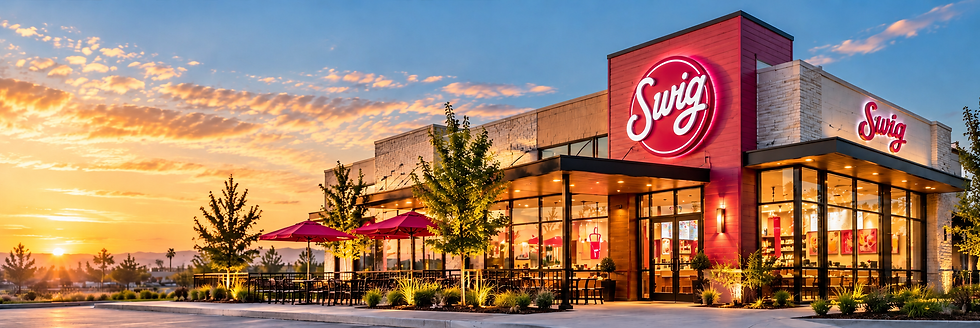
How Do I Sell My Swig Triple Net (NNN) Property?
If your goal is to achieve the strongest possible sale price for a Swig Triple Net (NNN) property, the strategy should begin with exposing the asset to the broadest appropriate pool of qualified buyers while positioning its lease, guarantor, income, location, and underlying real estate correctly. Mercedes Shaffer and Highwater Partners combine sophisticated NNN property and lease analysis, strategic pricing, national outreach to NNN investors and 1031 exchange buyers, traditional commercial real estate marketing, and Mercedes’ direct investor-facing presence through The Commercial Real Estate Deal Room on YouTube. Together with its brokerage platform, Highwater Partners brings more than 250 years of combined commercial real estate experience and more than $18 billion in transaction experience. For Swig properties, the actual guarantor, remaining lease term, drive-thru configuration, and residual real estate can be especially important to buyer underwriting.
Achieving a strong sale outcome requires more than placing a Swig property on the market and choosing an asking cap rate. Swig is closely associated with a compact, drive-thru-oriented beverage model and has publicly emphasized flexible real estate formats ranging from ground-up sites to end-cap drive-thrus. For sellers, that means the lease credit story and the functionality of the physical site should be evaluated together before the property is marketed.
What Will Buyers Evaluate in My Swig NNN Property?
Buyers will evaluate the entire investment rather than simply the Swig name on the building. A useful seller framework is Brand → Guarantor & Lease → Income → Location → Underlying Real Estate, followed by Marketing & Buyer Exposure as the sixth layer that determines how effectively those characteristics reach the market.
Swig has publicly described a franchise strategy focused on experienced multi-unit operators and multi-location development. For the owner of an individual property, however, the important question is not simply whether the brand is growing; it is which legal entity actually signs the lease and which entity, if any, guarantees the rent.
Brand recognition and guarantor strength are not necessarily the same. A substantial multi-unit operator may be viewed differently from a newly formed single-purpose entity, even though both properties carry the same Swig signage. Buyers and lenders may therefore analyze the tenant entity, guaranty, assignment provisions, remaining term, and overall lease economics before determining how aggressively they are willing to pursue the asset.
The physical property creates another layer of value. A well-configured drive-thru location with strong access, visibility, traffic flow, and adaptable real estate may tell a different investment story from a site with limited stacking, difficult ingress and egress, or highly specialized improvements.
How Do the Swig Tenant and Guarantor Affect My Sale?
The entity legally responsible for the lease can materially affect pricing, financing, and buyer demand. Sellers should identify the actual tenant and guarantor before marketing rather than assuming that Swig’s brand recognition alone establishes the credit behind the lease.
A buyer may want to know whether the tenant is a corporate entity, established multi-unit franchisee, regional operator, or single-purpose entity. The scope of any guaranty also matters. Sellers should review whether that guaranty remains in place throughout the term, how assignments are handled, and whether amendments have altered the original obligations.
These distinctions can change the appropriate buyer pool. A straightforward lease with clearly documented credit support may be suitable for a broad range of private NNN investors, while a more complex operator or guaranty structure may require investors who are comfortable analyzing franchise-level credit and putting more weight on the underlying real estate.
Pre-market preparation matters because uncertainty can weaken seller leverage. Providing organized lease documentation, amendments, guaranties, and other relevant materials allows buyers to evaluate the asset more efficiently and reduces the likelihood that avoidable questions emerge only after the property is under contract.
How Do Lease Term and Rent Affect a Swig Property Sale?
Remaining firm lease term can significantly affect marketability because NNN investors are buying a contractual income stream in addition to the land and improvements. Longer contractual term can provide greater income visibility, while shorter remaining term may cause buyers to focus more closely on renewal probability, replacement rent, and residual real estate.
Firm term should always be distinguished from renewal options. Several option periods may provide potential future occupancy, but they are not economically identical to years already contractually committed by the tenant. Owners evaluating a sale should understand how remaining lease term can affect the value of a Triple Net property before waiting until the firm term becomes materially shorter.
Rent escalations are another important consideration. Contractual increases can create visible income growth, while extended periods of flat rent produce a different underwriting profile. Buyers may also compare contract rent with current market rent to understand whether the existing income appears sustainable and what the property might command if the tenancy eventually changes.
The complete lease deserves review as well. Roof and structure responsibilities, taxes, insurance, maintenance, assignment provisions, termination rights, renewal options, purchase options, rights of first refusal, casualty, condemnation, and capital obligations can all influence investor perception. Two properties described as NNN can have materially different economic structures.
Why Is the Swig Drive-Thru Site So Important?
The drive-thru site can be one of the most important elements of a Swig investment because the brand’s operating model places substantial emphasis on efficient, convenience-oriented real estate. Swig has publicly promoted flexible formats including ground-up and end-cap drive-thru locations and relatively compact store footprints.
For a seller, this means the site should be marketed as real estate as well as a leased investment. Buyers may analyze drive-thru stacking, circulation, ingress and egress, frontage, signage, visibility, traffic patterns, parcel configuration, parking, zoning, neighboring retailers, and the strength of the surrounding trade area.
A compact building can potentially create attractive land-use efficiency, but adaptability matters. Buyers may ask whether another beverage, coffee, QSR, or service-oriented tenant could economically occupy the site if Swig eventually left. A property with strong access and flexible physical improvements may provide a more compelling residual-value story than one whose usefulness depends heavily on the current tenant.
Owners should also evaluate building age, condition, deferred maintenance, possible remodel obligations, and future capital requirements. Those physical issues can affect both buyer confidence and the amount of value investors attribute to the underlying real estate.
Highwater Partners’ guide to selling QSR Triple Net (NNN) real estate provides a broader framework for understanding why drive-thru and beverage properties should be evaluated as both income investments and physical real estate.
How Should a Swig NNN Property Be Marketed Nationally?
A Swig property should be marketed to investors who understand the interaction among the lease, guarantor, drive-thru format, location, financing, and residual real estate. Relying primarily on buyers near the property can unnecessarily restrict the opportunity set because NNN investors frequently acquire assets outside their home markets.
National exposure is particularly relevant to 1031 exchange buyers. Exchange investors may search across multiple states for replacement properties that satisfy defined requirements for income, lease term, financing, closing timing, location, and risk. A Swig property whose characteristics fit those criteria may therefore appeal to an investor located far from the local market.
The objective is not simply to generate more listing views. Broad exposure should increase the opportunity for qualified investors to evaluate the property and, when market conditions allow, create competitive interest that supports the seller’s negotiating position.
This is why national exposure can matter when selling Triple Net real estate. Highwater Partners combines traditional commercial real estate listing exposure and broker relationships with targeted outreach to private NNN investors, 1031 exchange buyers, family offices, and institutional capital when appropriate.
Mercedes Shaffer’s investor-facing presence through The Commercial Real Estate Deal Room provides another channel beyond a conventional listing-only approach. The objective is to keep Highwater Partners connected to investors already interested in net lease real estate, passive investment property, tenant and lease risk, valuation, and exchange strategy.
When Should I Sell My Swig NNN Property?
The appropriate time to sell depends on the individual lease, property, guarantor, and owner objectives rather than a universal rule. Remaining firm term, upcoming options, scheduled rent increases, possible tenant decisions, physical property condition, anticipated capital expenditures, local development, and financing conditions should all be considered.
Waiting can help in some circumstances, such as when a favorable contractual increase or another positive event is approaching. In other situations, waiting may allow lease term to shorten enough that buyers begin assigning more weight to renewal risk or lenders become less comfortable with the remaining duration.
Swig’s broader growth story may help generate investor interest, but brand expansion should not replace analysis of the individual property. Buyers will still focus on whether the specific location has good access, strong visibility, efficient drive-thru circulation, sustainable rent, appropriate lease credit, and useful residual real estate.
Owners considering timing can review when to sell a Triple Net (NNN) property. The goal is to choose a point when the property presents a compelling combination of income certainty, physical real estate quality, buyer demand, and seller leverage.
What Triple Net (NNN) Sellers Often Miss
One issue Swig sellers can overlook is the distinction between the brand and the actual lease guarantor. A recognizable or expanding brand may attract attention, but investors still need to determine exactly which entity owes the rent and what financial support stands behind those obligations.
Owners may also combine firm lease term with renewal options when describing lease duration. Buyers generally treat committed contractual years differently from future options controlled by the tenant, and that distinction can influence financing and pricing.
The drive-thru configuration deserves equally careful attention. A compact property can be efficient, but buyers will still evaluate stacking capacity, site access, visibility, curb cuts, parcel configuration, zoning, building adaptability, and replacement-tenant demand. Those factors can become particularly important when the investor considers long-term residual value.
Another issue owners sometimes miss is that the strongest potential buyer may not be local. A specialized NNN investor or 1031 exchange buyer several states away may place greater value on the property than someone in the immediate market. Limiting exposure can therefore narrow the seller’s opportunity to create meaningful competition.
Bottom Line
Selling a Swig Triple Net property successfully requires positioning more than the tenant name. The actual tenant and guarantor, remaining lease term, rent economics, drive-thru configuration, site quality, residual real estate, and national buyer pool can all influence marketability and the price buyers are willing to support.
Highwater Partners’ role is to analyze those variables, present the property around its genuine strengths, anticipate buyer objections, reach qualified national investors, and protect the seller’s leverage throughout the transaction.
Frequently Asked Questions
How do I get the highest price for my Swig NNN property?
Pursuing the strongest market-supported sale price begins with understanding the guarantor, lease, rent, remaining term, drive-thru site, location, financing profile, and residual real estate. The property should then be strategically priced and marketed to a national pool of qualified investors rather than relying primarily on local exposure.
Does my Swig guarantor affect what buyers will pay?
Yes. Buyers generally evaluate the entity legally responsible for the rent and the strength of any guaranty rather than relying solely on the Swig brand. The operator’s financial profile, lease obligations, guaranty structure, and assignment provisions can influence financing, risk perception, and the likely buyer pool.
How much is my Swig NNN property worth?
Value depends on the complete investment. Buyers may consider the guarantor, remaining lease term, rental schedule, site access, drive-thru functionality, location, landlord obligations, financing, physical condition, and underlying real estate. Two Swig properties can therefore have materially different values even when they carry the same brand.
Does the drive-thru configuration affect the value of my Swig property?
It can materially influence buyer perception. Investors may evaluate drive-thru stacking, access, circulation, visibility, frontage, parcel size, zoning, traffic flow, and replacement-tenant potential. A highly functional and adaptable drive-thru site can support a stronger residual real estate story.
Do 1031 exchange buyers matter when I sell a Swig property?
They can represent an important part of the potential buyer pool. Exchange investors often search nationally for replacement assets that meet particular lease, income, financing, location, risk, and timing requirements. National marketing helps increase the opportunity to reach exchange capital whose criteria align with the property.
Should I sell before my Swig lease gets shorter?
It is worth evaluating the sale strategy before firm lease term becomes materially shorter. Declining lease duration can affect lender underwriting, buyer demand, perceived renewal risk, and marketability. Whether selling now or waiting makes sense depends on the specific lease, tenant, real estate, financing environment, and owner objectives.
Related Triple Net (NNN) Resources
Owners considering representation can review how to choose the right Triple Net (NNN) broker and evaluate the importance of specialized lease analysis, strategic valuation, national investor reach, professional marketing, negotiation strategy, and transaction execution.
Let’s Connect
If you are considering selling a Swig NNN property, a confidential valuation and positioning discussion can help determine how buyers may view the tenant and guarantor, lease economics, drive-thru site, residual real estate, timing, and likely national buyer pool. Highwater Partners can help analyze those variables and develop a strategic marketing plan before you decide when and how to bring the asset to market.
About Mercedes Shaffer
Mercedes Shaffer is the Founder of Highwater Partners, a commercial real estate advisory firm specializing in Triple Net (NNN) investments, 1031 exchanges, multifamily investment properties, and single-tenant net lease real estate throughout the United States. Together with her brokerage platform, her team brings more than 250 years of combined commercial real estate experience and more than $18 billion in transaction experience.
Mercedes advises private investors, family offices, developers, and institutional investors on the acquisition, disposition, valuation, and exchange of investment real estate. Her expertise includes tenant credit analysis, lease structure, cap rates and valuation, 1031 exchange strategy, market and location fundamentals, and the evaluation of risk in Triple Net investments.
In addition to her advisory work, Mercedes is also the creator and host of the Commercial Real Estate Deal Room, an educational platform focused on helping investors understand Triple Net real estate, 1031 exchanges, lease and tenant risk, valuation, and the transition from management-intensive properties into more passive real estate investments.
Mercedes is known for an analytical approach that goes “beyond the cap rate” and the glossy brochure. Rather than evaluating an investment solely by its advertised yield or the name on the building, she examines the tenant, lease, underlying real estate, market fundamentals, exit strategy, and the investor’s broader objectives.
Her philosophy is straightforward: there is no universally “best” Triple Net property—only an investment whose combination of real estate, income, risk, and long-term strategy may or may not be appropriate for a particular investor. That perspective guides her work across acquisitions, dispositions, 1031 exchanges, and long-term investment strategy.