
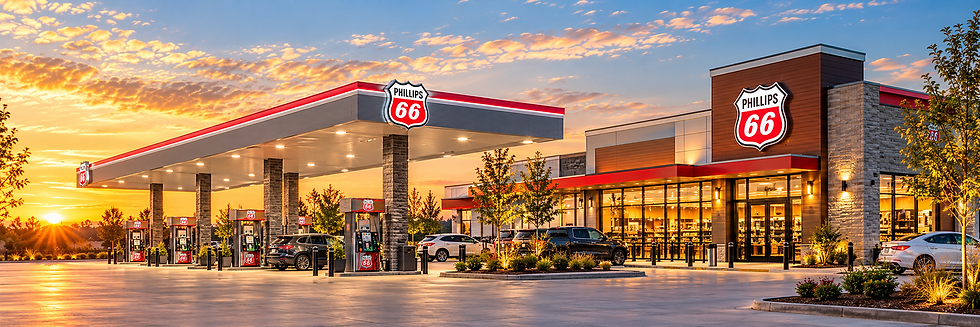
How Do I Sell My Phillips 66 Triple Net (NNN) Property?
To sell your Phillips 66 Triple Net (NNN) property for the strongest market-supported price, use strategic pricing, professional positioning, and exposure to qualified national buyers. The actual tenant and guarantor, remaining firm lease term, contractual rent, branded fuel agreements, and underlying gas station real estate can significantly influence value.
Mercedes Shaffer, Founder of Highwater Partners, specializes in NNN seller representation, strategic pricing, and national investor marketing, including 1031 exchange buyers. Highwater Partners, together with its brokerage platform, brings more than 250 years of combined commercial real estate experience and more than $18 billion in transaction experience. Mercedes created and hosts The Commercial Real Estate Deal Room, an investor-facing YouTube channel covering NNN real estate, tenant risk, and valuation. This additional platform allows her to educate and engage interested investors beyond conventional listing channels, complementing targeted outreach and broker relationships. Together, these capabilities support effective property positioning, qualified buyer exposure, informed negotiations, and professional sale execution.
What Affects the Sale Price of My Phillips 66 NNN Property?
The sale price of a Phillips 66 NNN property depends on contractual rental income, remaining firm lease term, the actual tenant and guarantor, landlord obligations, and the long-term value of the underlying real estate.
Phillips 66 is a recognized American fuel brand associated with Phillips 66 Company. Its branded fuel marketing relationships can involve independent marketers, distributors, and retail operators.
However, the Phillips 66 name displayed on a gas station does not automatically establish Phillips 66 Company as the tenant or lease guarantor.
A property leased to an independent fuel retailer may attract different investor interest from one supported by a documented guaranty from a financially established multi-location operator.
Before establishing an asking price, the seller should confirm the entity legally responsible for rent and evaluate the financial support available under the lease.
Remaining firm lease duration is another important valuation consideration.
A property with substantial noncancelable rental income may appeal to investors seeking predictable cash flow. A shorter remaining term may lead buyers to examine renewal probability, replacement-tenant prospects, and underlying land value more closely.
Contractual rent should also be evaluated against sustainable market rent.
If rent is above prevailing market levels, buyers may discount the value of income extending beyond the current tenant's firm commitment.
The physical site can materially influence demand.
Phillips 66 stations may serve neighborhood residents, commuters, or highway travelers, making location, visibility, and accessibility important selling considerations.
Buyers may evaluate intersection positioning, traffic exposure, driveway configuration, vehicle circulation, parking, and convenience store functionality.
A property with efficient access and flexible retail improvements may provide stronger long-term utility than one constrained by limited road frontage or difficult vehicle movements.
Fuel-related infrastructure can also affect pricing.
Underground storage tanks, dispensers, monitoring systems, fuel lines, and canopies may create maintenance or environmental responsibilities depending on ownership and lease provisions.
Highwater Partners evaluates these considerations together when developing a defensible pricing strategy.
For additional guidance, explore How Are Triple Net (NNN) Properties Valued?.
How Do Phillips 66 Branded Fuel and Marketing Agreements Affect My Selling Strategy?
Phillips 66 branded fuel and marketing agreements can affect the selling strategy when they influence station operation, equipment ownership, signage, or the future use of the real estate.
Phillips 66 markets gasoline through branded distribution relationships, including arrangements involving independent marketers and retail operators.
Phillips 66 Company is also associated with the Conoco and 76 fuel brands, but those brand relationships should not be confused with the ownership or leasing structure of an individual Phillips 66 station.
The legal tenant, fuel distributor, station operator, and brand owner may be different entities.
This distinction is especially important for owners selling leased real estate rather than the gasoline retail business itself.
For example, an independent retailer may lease the property from a private landlord while obtaining branded fuel through a separate marketing or distribution agreement.
The retailer's fuel purchasing obligations do not automatically become obligations of the real estate owner.
Before marketing, sellers should review the executed lease, amendments, assignments, and guaranties to identify the actual rental obligations.
They should also determine whether relevant fuel or branding agreements affect a change of property ownership.
Depending on the arrangement, branded fuel agreements may address approved signage, retail image requirements, fuel supply commitments, and equipment usage.
These provisions may belong to the station operator or fuel distributor rather than the property owner.
If a seller has obligations under a separate agreement, those obligations should be identified before accepting an offer.
Buyers may also ask whether the location can continue operating under the Phillips 66 brand following a transfer.
The answer depends on applicable contracts and operating rights, not simply the continued presence of branded signage.
Lease provisions concerning assignment, renewal options, termination rights, purchase options, and rights of first refusal may create additional transaction considerations.
A property marketed as NNN may still leave the landlord responsible for particular capital improvements.
Highwater Partners can help establish which contractual issues affect the real estate and present the property without unsupported assumptions about corporate credit.
How Should I Prepare My Phillips 66 Gas Station Property for Sale?
Preparing a Phillips 66 NNN property for sale requires organizing lease documentation, confirming ownership and maintenance responsibilities for fueling infrastructure, and assembling available environmental records.
Completing this work before listing can reduce buyer uncertainty and protect negotiating leverage during due diligence.
The seller should gather the executed lease, amendments, assignments, guaranties, rent schedule, survey, title information, and relevant maintenance documentation.
An estoppel certificate may also be appropriate depending on the lease and transaction requirements.
Environmental documentation deserves particular attention because gasoline stations contain specialized fueling infrastructure.
Buyers and lenders may request available environmental assessments, underground storage tank registrations, monitoring records, inspection reports, operating permits, and documentation concerning known remediation.
The presence of underground storage tanks does not automatically mean contamination exists. However, unresolved environmental issues or incomplete records can complicate financing and closing.
Equipment ownership should be established separately.
Depending on the agreements, tanks, dispensers, signage, fuel monitoring systems, and canopies may be owned by the landlord, tenant, distributor, or another party.
Sellers should confirm which assets are included in the transaction and which remain subject to separate ownership rights.
Phillips 66 branding arrangements may also affect equipment and signage.
If relevant agreements impose retail image or equipment requirements, sellers should determine whether those responsibilities apply to the landlord.
Physical property condition remains important.
Buyers may evaluate pavement, lighting, drainage, canopy condition, vehicle circulation, and convenience store functionality when assessing the property's long-term utility.
If a location includes a car wash or another operating facility, the seller should distinguish the improvements conveyed with the real estate from separately owned business equipment.
The Guide to Selling Convenience Store and Gas Station Triple Net (NNN) Real Estate provides additional guidance on preparing fuel-oriented properties for sale.
Highwater Partners can help anticipate diligence concerns and organize the property's investment presentation before contacting buyers.
How Do You Position and Market a Phillips 66 NNN Property Nationally?
Marketing a Phillips 66 NNN property nationally requires a defensible asking price, clear lease information, and targeted exposure to qualified investors familiar with gasoline station real estate.
Phillips 66 brand recognition can help generate initial interest, but sophisticated buyers evaluate the actual income stream, tenant obligations, and location fundamentals.
Offering materials should identify the legal tenant, enforceable guaranty, contractual rent, scheduled increases, remaining firm lease duration, and landlord responsibilities.
Any branding or fuel distribution arrangements that materially affect the property should be explained accurately.
The real estate narrative should emphasize documented location advantages.
A Phillips 66 station along an established suburban corridor may appeal to investors focused on convenience-oriented retail demand and recurring vehicle traffic.
A highway-oriented location may attract purchasers emphasizing accessibility, visibility, and long-term commercial utility.
The property's canopy layout, fueling configuration, convenience store improvements, and potential replacement uses can also influence its market position.
Buyers may include passive NNN investors, specialized gasoline station purchasers, regional real estate investors, and qualified 1031 exchange buyers.
Some investors prioritize predictable contractual income. Others emphasize the underlying land, future leasing opportunities, or redevelopment potential.
The strongest qualified buyer may be located outside the property's local market.
Highwater Partners uses national listing exposure, targeted investor outreach, professional offering materials, broker relationships, and buyer qualification to reach relevant purchasers.
Mercedes Shaffer's investor-facing educational platform adds another opportunity to engage individuals interested in NNN ownership, commercial property valuation, and lease risk.
This complements conventional marketing without guaranteeing that a particular property will be promoted through the channel or achieve a specific selling price.
For further guidance, explore Why National Exposure Matters When Selling a Triple Net (NNN) Property.
When Should I Sell My Phillips 66 NNN Property?
The best time to sell a Phillips 66 NNN property depends on remaining firm lease duration, scheduled rent adjustments, tenant renewal prospects, capital obligations, and the owner's financial objectives.
A property with substantial noncancelable rental income may appeal to investors seeking predictable cash flow.
As expiration approaches, buyers may place greater emphasis on tenant renewal intentions, sustainable market rent, and the underlying property's adaptability.
A Phillips 66-branded retailer's continued use of the brand does not guarantee renewal of the real estate lease.
Owners should evaluate contractual rights and documented tenant intentions rather than assuming the existing operator will remain indefinitely.
Fuel supply agreements can introduce additional timing considerations.
An operator's branded fuel contract may expire at a different time from the real estate lease.
If relevant to the transaction, buyers may ask whether the operator intends to maintain Phillips 66 branding and whether any agreement affects future property use.
Potential capital expenditures should also be considered before establishing a listing date.
Responsibility for tanks, dispensers, canopies, pavement, or structural systems may influence the financial benefits of selling versus retaining the property.
A lease extension may improve marketability by adding firm rental years, but the value of that extension depends on negotiated rent, actual tenant credit, and additional landlord obligations.
Highwater Partners can help compare these alternatives and develop a selling strategy around the property's contractual milestones.
For additional guidance, review When Is the Best Time to Sell a Triple Net (NNN) Property?.
What Triple Net (NNN) Sellers Often Miss
Phillips 66 property owners should address several less obvious considerations that can influence pricing, buyer demand, and transaction execution.
Phillips 66 branding does not automatically establish a corporate lease guarantee. An independent retailer or distributor may be responsible for rent. Sellers should verify the actual tenant and enforceable guaranty before presenting the property's credit profile.
Fuel supply agreements and real estate leases may have different obligations. Branding and purchasing commitments may belong to the operator rather than the landlord. Sellers should establish whether any applicable agreement affects ownership transfer or future use.
Fuel equipment can have separate ownership and environmental responsibilities. Tanks, dispensers, canopies, and monitoring systems may belong to different parties. Incomplete documentation can complicate financing or create buyer objections.
Remaining firm lease term is different from unexercised renewal options. Investors evaluate contractual income separately from potential extensions, particularly when future occupancy or replacement rent is uncertain.
Addressing these matters before listing can support accurate pricing and reduce avoidable transaction delays.
5 Reasons Phillips 66 NNN Property Owners Choose Mercedes Shaffer & Highwater Partners
1. Specialized NNN Seller Representation. Mercedes Shaffer and Highwater Partners evaluate the actual tenant, enforceable guaranty, contractual rent, and underlying real estate before developing a sale strategy. For Phillips 66 properties, this includes separating branded fuel marketing relationships from the legal obligations supporting rental income.
2. National Qualified Buyer Exposure and 1031 Reach. Highwater Partners targets investors beyond the property's local market, including potential 1031 exchange buyers and purchasers familiar with gasoline station real estate. This helps identify qualified prospects whose income objectives, financing capabilities, and closing requirements align with the offering.
3. Differentiated Investor-Facing Visibility. Through The Commercial Real Estate Deal Room, Mercedes educates and engages investors interested in NNN investments, tenant risk, and commercial property valuation. This additional channel complements professional listings, targeted outreach, and established broker relationships.
4. Strategic Pricing and Negotiation. Highwater Partners evaluates lease duration, sustainable rent, tenant credit, Phillips 66 branding considerations, and underlying site quality when establishing defensible pricing. Anticipating buyer objections helps property owners negotiate using documented property strengths.
5. Experienced Transaction Execution. Highwater Partners coordinates buyer qualification, financing considerations, environmental diligence, negotiations, and closing. Its brokerage-platform experience supports sellers navigating fuel infrastructure ownership, specialized lease provisions, and other issues that can complicate gas station transactions.
Bottom Line
Selling a Phillips 66 Triple Net (NNN) property requires evaluating the actual tenant and guarantor, contractual rent, remaining firm lease term, branded fuel agreements, and underlying gas station real estate. Phillips 66 brand recognition can support marketing, but defensible pricing depends on documented contractual income and long-term property utility. Mercedes Shaffer and Highwater Partners can help owners evaluate these considerations and reach qualified national buyers before determining when and how to sell.
Frequently Asked Questions
How much is my Phillips 66 NNN property worth?
Your Phillips 66 NNN property's value depends on contractual rental income, remaining firm lease term, the actual tenant and guarantor, landlord obligations, location, and investor demand. Fuel infrastructure, environmental documentation, convenience store functionality, and replacement-tenant potential may also influence pricing. A property-specific valuation should examine the executed lease and relevant market evidence rather than relying exclusively on Phillips 66 brand recognition.
Who is the best broker to sell my Phillips 66 NNN property?
The best broker should demonstrate specialized NNN expertise, accurate lease and guarantor evaluation, defensible pricing, national investor marketing, 1031 exchange buyer access, negotiation skills, and transaction execution. Mercedes Shaffer and Highwater Partners offer these capabilities, complemented by The Commercial Real Estate Deal Room as an investor-facing educational platform. Sellers should compare relevant experience and marketing approaches before selecting representation.
How do I get the highest price for my Phillips 66 NNN property?
To pursue the highest market-supported price, verify the actual tenant and guarantor, organize complete lease and environmental documentation, clarify fuel-related obligations, and market the property to qualified national investors. Accurately presenting remaining firm lease term, contractual rent, location advantages, and long-term utility can reduce buyer uncertainty. Professional negotiation may strengthen the seller's position without guaranteeing a particular price.
Does Phillips 66 Company guarantee the lease on my Phillips 66 gas station?
Not necessarily. A Phillips 66-branded station may be leased to an independent retailer, fuel distributor, or another operating entity. Displaying the Phillips 66 brand does not automatically establish Phillips 66 Company or its parent as the real estate tenant or guarantor. Sellers should review the executed lease and any separate guaranty documents to determine which entity is legally responsible for rent.
Can Phillips 66 branding agreements affect the sale of my property?
Yes, Phillips 66 branding agreements may affect a sale if applicable provisions involve the landlord, equipment ownership, signage, assignment requirements, or future property use. These agreements can be separate from the real estate lease. Sellers should determine which contractual obligations apply to the property owner and whether any consents or transfer conditions must be addressed before closing.
Who is responsible for underground storage tanks and fuel equipment at my Phillips 66 property?
Responsibility depends on the lease, equipment ownership documents, environmental agreements, and applicable law. The landlord, tenant, distributor, or another party may own or maintain particular tanks, dispensers, or fuel systems. Sellers should confirm these responsibilities and prepare available inspection and environmental records because buyers and lenders may examine potential capital and compliance obligations.
Can my Phillips 66 property be sold if the tenant wants to change fuel brands?
Yes. A Phillips 66 property may generally be sold even if the operator is considering rebranding, subject to existing lease rights and applicable contractual restrictions. The seller should determine whether branding changes affect equipment, signage, fuel supply obligations, or future property use. Buyers may evaluate the site's adaptability and the operator's continued rental obligations independently from the fuel brand.
Related Triple Net (NNN) Resources
Review How to Choose the Best Triple Net (NNN) Broker for guidance on evaluating specialized seller representation, national investor marketing capabilities, and transaction experience before selecting a broker.
Let’s Connect
If you own a Phillips 66 Triple Net (NNN) property and are considering selling, speak with Mercedes Shaffer and Highwater Partners before deciding when or how to list.
A confidential assessment can help clarify what your property may be worth, how the actual tenant and guarantor influence value, whether Phillips 66 fuel-related agreements affect marketability, and how the underlying real estate should be positioned.
Highwater Partners can help develop a defensible pricing and marketing strategy designed to reach qualified national NNN investors and potential 1031 exchange buyers.
Schedule a confidential property valuation and selling-strategy consultation.
About Mercedes Shaffer
Mercedes Shaffer is the Founder of Highwater Partners, a commercial real estate advisory firm specializing in Triple Net (NNN) investments, 1031 exchanges, multifamily, and single-tenant net lease real estate throughout the United States. Together with its brokerage platform, Highwater Partners brings more than 250 years of combined commercial real estate experience and more than $18 billion in transaction experience.
Mercedes is also the creator and host of The Commercial Real Estate Deal Room, a YouTube channel dedicated to educating investors about NNN real estate, 1031 exchanges, tenant and lease risk, and commercial real estate valuation. Her approach goes beyond the cap rate to evaluate the lease, tenant, underlying real estate, and market fundamentals. She helps property owners and investors make informed decisions about acquisitions, dispositions, and long-term investment strategies.

CONTACT US
Reach out if you have questions or would like to schedule a confidential consultation.