
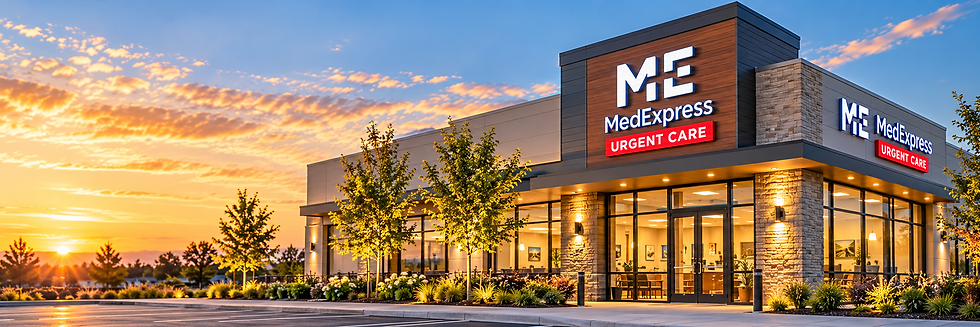
How Do I Sell My MedExpress Urgent Care Triple Net (NNN) Property?
To sell your MedExpress Urgent Care Triple Net (NNN) property for the strongest market-supported price, combine strategic pricing, accurate lease positioning, and qualified national buyer exposure. The actual tenant and guarantor, remaining firm lease term, current occupancy status, ownership transitions, and specialized medical improvements can significantly influence value.
Mercedes Shaffer and Highwater Partners specialize in NNN seller representation, strategic pricing, and national investor marketing, including qualified 1031 exchange buyers. Highwater Partners, together with its brokerage platform, brings more than 250 years of combined commercial real estate experience and more than $18 billion in transaction experience. Mercedes created and hosts The Commercial Real Estate Deal Room, an investor-facing educational channel covering NNN investments, lease risk, valuation, and 1031 exchanges. This provides another way to educate and engage relevant investors beyond conventional listings and broker relationships, complementing national outreach and professional representation. The objective is defensible positioning, qualified buyer interest, and informed negotiation.
What Determines the Sale Price of My MedExpress Urgent Care NNN Property?
The sale price of a MedExpress Urgent Care NNN property depends on enforceable rental income, remaining firm lease term, the legal tenant and guarantor, current occupancy, and underlying healthcare real estate.
MedExpress has undergone significant operating changes, including clinic closures and transfers involving other healthcare operators. This makes accurate verification of each property's status especially important.
A MedExpress sign, historical affiliation with Optum, or previous urgent care operation should not be treated as evidence of continuing occupancy or rental security.
Contractual rent establishes the starting point for valuation.
Investors evaluate annual base rent, scheduled increases, remaining firm lease duration, and actual payment obligations.
A property with continuing rent payments and substantial committed lease term may attract income-focused buyers. However, a closed clinic with an existing lease presents different questions from an actively operating location.
The seller should establish whether the property remains occupied, whether rent continues, and which entity is contractually responsible.
Tenant identity and guarantor support influence financing.
MedExpress was acquired by Optum, part of UnitedHealth Group, in 2015. However, that historical relationship does not automatically establish an Optum or UnitedHealth Group rent guaranty.
The executed lease and any signed guaranty determine enforceable contractual support.
Current property status affects the buyer audience.
An operating urgent care center, a dark property with continuing rent, and a vacant building with an expired lease are not equivalent investment opportunities.
Each requires a different pricing strategy and marketing narrative.
Underlying real estate remains important.
Visibility, parking, access, zoning, medical improvements, and potential alternative users influence residual value.
A well-located former urgent care property may retain usefulness even when its original operator has changed.
For additional guidance, explore how Triple Net (NNN) properties are valued.
How Do MedExpress Closures and Ownership Changes Affect My Selling Strategy?
MedExpress closures and operating transitions affect selling strategy because investors need to understand whether the property is still leased, who remains responsible for rent, and whether another healthcare operator has assumed occupancy.
MedExpress locations have closed in many states. Certain locations in Pennsylvania, Virginia, and West Virginia have continued under new ownership arrangements involving UPMC and GoHealth Urgent Care.
These developments make it particularly important to evaluate the circumstances of the individual property rather than apply one assumption to the entire former network.
Distinguish an operating clinic from a closed location.
A property may still operate as a healthcare facility, may have transitioned to another operator, or may no longer provide patient services.
Operational closure does not necessarily terminate an existing lease.
A tenant may remain contractually responsible for rent after ceasing operations, depending on the agreement and applicable circumstances.
Verify lease assignments and amendments.
Where a location has changed operators, the seller should determine whether the lease was assigned, amended, terminated, or replaced.
A change in medical operations does not automatically establish that a new operator assumed the original tenant's rental obligations.
The actual signed documents determine contractual responsibility.
Do not assume Optum guarantees the lease.
Optum's previous ownership of MedExpress does not automatically make Optum or UnitedHealth Group responsible for every MedExpress property lease.
A signed guaranty may provide additional support, but its existence and scope must be verified.
Investors will evaluate these distinctions when considering financing and purchase terms.
Review the remaining firm lease term.
A property with substantial committed lease duration may have a different buyer audience from one approaching expiration.
Renewal options are not equivalent to years already contractually committed.
Understanding how remaining lease term affects NNN property value can help owners evaluate potential sale timing.
Consider whether re-leasing could improve marketability.
If a property is vacant or its lease is nearing expiration, securing a qualified replacement healthcare tenant may be worth evaluating.
However, a renewal or new lease should be considered alongside market rent, tenant improvement costs, guarantor support, and the time required to complete the transaction.
A seller should compare these alternatives before assuming that immediate marketing or re-leasing is automatically preferable.
How Do MedExpress Medical Improvements Affect Property Marketability?
MedExpress medical improvements affect marketability because former urgent care buildings may offer examination rooms, treatment areas, diagnostic facilities, and specialized infrastructure suitable for another healthcare provider.
Their contribution to value depends on condition, equipment ownership, and future tenant requirements.
Examination and treatment rooms may support medical reuse.
A MedExpress clinic may contain patient examination rooms, reception areas, treatment spaces, and clinical support facilities.
These features may appeal to another urgent care provider, primary care practice, or specialty outpatient healthcare operator.
However, another occupant may need a different layout or additional improvements.
Diagnostic imaging areas require careful evaluation.
MedExpress has offered X-ray services as part of its urgent care model.
Where an individual building contains an imaging room, buyers may review shielding, electrical infrastructure, equipment ownership, and conversion expenses.
A former imaging room can be useful to certain medical users while presenting additional costs for others.
Laboratory and occupational medicine spaces can influence adaptability.
MedExpress has provided occupational healthcare services, including employment-related examinations and testing.
A particular building may contain specimen collection areas, laboratory-related facilities, or dedicated occupational medicine rooms.
Their usefulness depends on the replacement tenant's services and the actual condition of the improvements.
Equipment ownership should be established.
Medical imaging equipment, examination devices, computers, laboratory equipment, and other clinical assets may belong to the operating tenant or another party.
The real estate sale does not automatically include medical equipment, patient records, clinical licenses, or the operating business.
Lease provisions should clarify which permanent improvements remain with the building.
Location and alternative-use flexibility support residual value.
A former MedExpress building may appeal to another urgent care operator, primary care clinic, occupational healthcare provider, or compatible outpatient medical tenant.
Certain properties may also support professional office or other commercial uses, subject to zoning and building configuration.
Realistic replacement-user demand should influence both pricing and marketing.
How Should I Prepare My MedExpress Urgent Care Property Before Listing?
Preparing a MedExpress property for sale requires a complete review of the lease, current tenant obligations, operating status, and physical property condition.
Because the brand has experienced closures and operator transitions, resolving these questions before marketing can be particularly valuable.
Assemble all executed lease documents.
Gather the original lease, amendments, assignments, guaranties, termination agreements if applicable, and current rent schedule.
Available estoppel certificates, notices, payment records, and correspondence concerning occupancy or operator changes may also be relevant.
These materials help establish what contractual income a purchaser can reasonably expect.
Confirm whether the property is operating, dark, or vacant.
Determine whether the location currently provides medical services and whether a tenant remains in possession.
If operations have ceased, verify whether rental payments continue and what rights or obligations remain under the lease.
The property's operational status and contractual status should be communicated separately.
Clarify changes in the legal tenant.
If a location has transitioned to another healthcare provider, establish whether the current occupant signed a new lease or legally assumed an existing one.
Do not rely solely on new signage or statements about healthcare network ownership.
Buyers need evidence of the entity responsible for rent.
Review capital responsibilities.
Even under a NNN arrangement, the landlord may retain obligations for structural repairs, roofing, HVAC equipment, or other property components.
Vacancy or operator changes may also raise questions about restoration obligations and the condition in which the property must be returned.
Document the medical improvements.
Provide accurate photographs, floor plans, and available maintenance records for examination rooms, diagnostic infrastructure, parking, and entrances.
Clarify ownership of clinical equipment and identify any known conversion considerations.
Organized records can reduce due diligence uncertainty and help preserve negotiating leverage.
How Can National Marketing Attract Qualified MedExpress Property Buyers?
National marketing can connect MedExpress property owners with investors seeking income-producing healthcare buildings, medical redevelopment opportunities, and appropriate 1031 exchange replacement properties.
The most relevant audience depends on the property's actual lease status and the viability of its future use.
Position the property according to verified facts.
An actively leased building should be marketed around its enforceable rental income, remaining firm term, legal tenant, and documented guarantor.
A dark property with continuing rent requires a presentation that distinguishes contractual income from active operations.
A vacant former clinic may be better positioned around building adaptability, local healthcare demand, and potential re-leasing.
Target different buyer profiles when appropriate.
Long-term income investors may prioritize committed rental payments and documented tenant support.
Healthcare real estate investors may focus on examination rooms, diagnostic infrastructure, and replacement-user prospects.
Owner-occupants or redevelopment-oriented buyers may be relevant where an existing lease no longer limits occupancy.
Reach national investors and 1031 exchange buyers.
Highwater Partners combines targeted outreach, national listing exposure, and broker relationships to identify relevant purchasers.
Qualified 1031 exchange buyers may have defined requirements for timing, income, financing, and property condition.
A suitable buyer may be located well beyond the immediate market.
Mercedes Shaffer's investor-facing educational platform provides another way to engage people interested in NNN real estate, tenant obligations, and valuation.
This complements conventional marketing without guaranteeing promotion of an individual listing.
Evaluate offers for closing certainty.
Purchase price should be considered alongside financing capability, deposit terms, due diligence periods, and closing requirements.
Properties affected by tenant changes or medical facility conversions may require additional documentation and negotiation.
For broader guidance, explore the guide to selling pharmacy, medical, and dental Triple Net (NNN) real estate.
What Triple Net (NNN) Sellers Often Miss
A closed MedExpress clinic may still have an enforceable lease. Operational closure does not automatically terminate the tenant's rental obligations. Sellers must establish the actual contractual status before deciding how to price or market the property.
Optum's historical ownership does not automatically establish rent guarantor support. The legal tenant and any separate guaranty must be confirmed through executed agreements rather than inferred from the MedExpress brand's corporate history.
A new healthcare operator may not have assumed the original lease. If a location transitioned to another provider, the seller should verify assignments, amendments, or replacement leases before representing the current rental arrangement.
Vacant medical improvements do not automatically translate into replacement rental income. Examination rooms and diagnostic facilities may be useful, but buyers also evaluate conversion costs, tenant improvement requirements, market rent, and local healthcare demand.
5 Reasons MedExpress Urgent Care NNN Property Owners Choose Mercedes Shaffer & Highwater Partners
Specialized NNN seller expertise. Mercedes Shaffer and Highwater Partners evaluate contractual income, legal tenant obligations, guarantor support, and underlying healthcare real estate. This is particularly important for MedExpress owners navigating clinic closures, operator transitions, or uncertainty about remaining rental obligations.
Qualified national exposure and 1031 exchange reach. Highwater Partners markets appropriate properties beyond the immediate local market, including to qualified 1031 exchange investors. Its strategy considers which buyers may be interested in existing healthcare income versus medical re-leasing or property repositioning opportunities.
Investor engagement through The Commercial Real Estate Deal Room. Mercedes' educational platform provides an additional opportunity to engage investors interested in NNN income, lease risk, and property valuation. It complements national listings and targeted outreach without guaranteeing promotion of any individual listing.
Strategic pricing, positioning, and negotiation. MedExpress properties can differ substantially in occupancy status, contractual tenant obligations, remaining firm term, and replacement-user potential. Highwater Partners considers these variables when developing pricing recommendations and addressing purchaser concerns.
Experienced representation through closing. Highwater Partners combines specialized advisory capabilities with substantial brokerage-platform transaction experience. Its process includes buyer qualification, contract negotiation, financing review, due diligence coordination, and closing management to support an organized property sale.
Bottom Line
Selling a MedExpress Urgent Care NNN property requires careful verification of current occupancy, remaining lease obligations, legal tenant identity, and underlying healthcare real estate. MedExpress closures and operating transitions make property-specific documentation especially important. Strategic pricing and qualified national exposure can help owners pursue a sale based on defensible facts rather than assumptions about the former brand.
Frequently Asked Questions
How much is my MedExpress Urgent Care NNN property worth?
Your MedExpress Urgent Care property's value depends on contractual rental income, current occupancy status, remaining firm lease term, the actual tenant and guarantor, and underlying medical real estate. A former clinic with an expired lease may require a different valuation approach from a building with continuing rental income. Location, medical improvements, market rent, and replacement-user demand also influence value.
Who is the best broker to sell my MedExpress Urgent Care NNN property?
The right broker should demonstrate NNN expertise, lease and guarantor analysis, national investor reach, qualified 1031 exchange buyer access, strategic pricing, and transaction execution. For MedExpress properties, experience evaluating dark buildings and operator transitions is especially useful. Mercedes Shaffer and Highwater Partners offer specialized representation, national marketing, and investor engagement through The Commercial Real Estate Deal Room.
How do I get the highest price for my MedExpress Urgent Care NNN property?
To pursue the strongest market-supported price, first establish the property's current contractual and operational status. Verify the tenant, guarantor, remaining rent obligations, and any lease assignments or terminations. Then develop a defensible valuation and market to qualified national buyers. A property with continuing rent may require different positioning from a vacant medical building.
What happens if my MedExpress Urgent Care location has closed?
A closed MedExpress clinic may still be subject to an enforceable lease, depending on the executed agreements and circumstances. The landlord should verify whether rent remains payable, which entity is responsible, and whether termination or assignment documents exist. These findings determine whether the property should be marketed primarily for its contractual income or future occupancy potential.
Does Optum or UnitedHealth Group guarantee my MedExpress property's rent?
Not automatically. Optum acquired MedExpress in 2015, but historical corporate ownership does not establish a parent-company guaranty for every property. The executed lease identifies the legal tenant, while any separate guaranty establishes additional contractual support. Investors and lenders will examine these documents rather than assume Optum or UnitedHealth Group is responsible.
How do UPMC-GoHealth transitions affect the sale of my MedExpress property?
An operating transition may affect the property's marketing strategy, but the legal consequences depend on the actual lease documentation. Where a former MedExpress location has transferred to a new healthcare operator, the owner should verify whether the lease was assigned, amended, terminated, or replaced. New signage or continued medical operations do not independently prove assumption of the original rental obligations.
Can my former MedExpress building attract another medical tenant?
Potentially. A former MedExpress building may appeal to another urgent care operator, primary care provider, occupational medicine practice, or compatible outpatient healthcare user. Existing examination rooms and diagnostic infrastructure may support certain occupants, while others require modifications. Zoning, accessibility, equipment ownership, building condition, and local demand determine practical re-leasing potential.
Related Triple Net (NNN) Resources
How to Choose the Best Triple Net (NNN) Broker
When Is the Best Time to Sell a Triple Net (NNN) Property?
Let’s Connect
If you own a MedExpress Urgent Care Triple Net (NNN) property and are considering selling, speak with Mercedes Shaffer and Highwater Partners before establishing an asking price or marketing timeline.
A confidential review can help determine what your property may be worth, whether contractual rental obligations remain enforceable, how any operating transition affects buyer perceptions, and whether the building's medical improvements support replacement-user demand.
Highwater Partners combines specialized NNN seller representation, strategic pricing, national marketing, and qualified 1031 exchange buyer outreach to support an informed selling process.
Whether your MedExpress property remains occupied, has transitioned to another healthcare operator, or is currently vacant, an individualized strategy can help determine the most appropriate buyer audience and transaction approach.
Schedule a confidential property valuation and selling-strategy consultation.
About Mercedes Shaffer
Mercedes Shaffer is the Founder of Highwater Partners, a commercial real estate advisory firm specializing in Triple Net (NNN) investments, 1031 exchanges, multifamily, and single-tenant net lease real estate throughout the United States. Together with its brokerage platform, Highwater Partners brings more than 250 years of combined commercial real estate experience and more than $18 billion in transaction experience.
Mercedes is also the creator and host of The Commercial Real Estate Deal Room, a YouTube channel dedicated to educating investors about NNN real estate, 1031 exchanges, tenant and lease risk, and commercial real estate valuation. Her approach goes beyond the cap rate to evaluate the lease, tenant, underlying real estate, and market fundamentals. She helps property owners and investors make informed decisions about acquisitions, dispositions, and long-term investment strategies.

CONTACT US
Reach out if you have questions or would like to schedule a confidential consultation.