
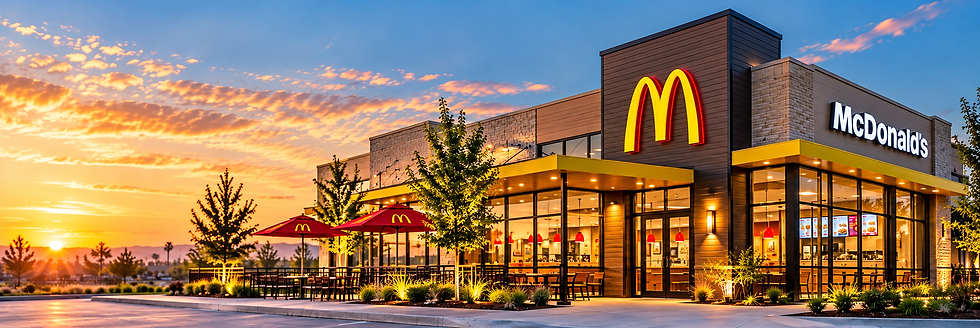
How Do I Sell My McDonald’s Triple Net (NNN) Property?
If your goal is to achieve the strongest possible sale price for a McDonald’s Triple Net (NNN) property, the strategy should begin with understanding exactly what buyers are acquiring and exposing the asset to the broadest appropriate pool of qualified investors. Mercedes Shaffer and Highwater Partners combine sophisticated NNN property, lease, tenant, guarantor, and valuation analysis with strategic pricing, national outreach to NNN and 1031 exchange buyers, traditional commercial real estate marketing, and Mercedes’ direct investor-facing presence through The Commercial Real Estate Deal Room on YouTube. Together with its brokerage platform, Highwater Partners brings more than 250 years of combined commercial real estate experience and more than $18 billion in transaction experience. For McDonald’s properties, the actual lease structure, responsible entity, remaining term, rent economics, and underlying restaurant real estate can materially affect the sale strategy.
Achieving a strong outcome requires more than marketing one of the most recognizable restaurant names in the world. McDonald’s real estate can involve different ownership, leasing, and operating arrangements, so a seller should verify exactly who is the tenant, who owns the improvements, what entity stands behind the lease, and what rights and obligations apply to the property. McDonald’s also places substantial importance on real estate selection and restaurant development, making the quality of the location itself an important part of the investment story.
What Will Buyers Evaluate in My McDonald’s NNN Property?
Buyers will evaluate much more than the McDonald’s name. A useful framework is Brand → Guarantor & Lease → Income → Location → Underlying Real Estate, followed by Marketing & Buyer Exposure as the seller-side layer that determines how effectively those strengths are presented to the market.
McDonald’s has a distinctive relationship with its restaurant real estate. Its U.S. franchising materials state that site selection is separate from franchisee selection and that McDonald’s evaluates locations, acquires property, and constructs restaurants in its development process before assigning franchise opportunities. That makes it especially important for an owner of an individual McDonald’s property to confirm the exact ownership and lease structure instead of assuming every McDonald’s location follows the same arrangement.
For a potential buyer, the critical questions include who is obligated under the lease, whether the obligation is supported by another entity, how long the firm term remains, what rent increases are scheduled, and which expenses or capital responsibilities remain with the landlord. The recognizable brand may generate initial investor interest, but those contractual details help determine how buyers and lenders actually underwrite the property.
The underlying real estate is another significant component. McDonald’s publicly emphasizes location quality and convenience in its development strategy, and its U.S. real estate materials address a range of restaurant settings, from freestanding neighborhood properties to nontraditional locations. A seller should therefore position the property as both an income-producing investment and a physical asset with its own location, access, land, and future-use characteristics.
How Do the Tenant, Lease and Guarantor Affect a McDonald’s Sale?
The tenant and lease structure can materially influence pricing because buyers need to know exactly what entity is responsible for the rental obligation. A McDonald’s sign on the building does not by itself establish the legal credit behind every individual lease.
Sellers should review the executed lease, amendments, assignments, guaranties, estoppels when available, and other agreements before establishing a marketing strategy. Depending on the specific property, buyers may need to understand relationships among the property owner, McDonald’s-related entities, franchise operators, and other parties associated with the restaurant.
The lease should also be analyzed for assignment provisions, purchase options, rights of first refusal, renewal options, termination rights, casualty and condemnation provisions, roof and structural responsibilities, maintenance obligations, taxes, insurance, and capital expenditures. Two properties both described as McDonald’s NNN investments can present very different economics if their documents allocate these responsibilities differently.
This is also where specialized NNN representation can add value. Instead of allowing buyers to define the lease story, the seller should understand the structure before marketing, identify the elements likely to strengthen buyer confidence, and prepare accurate responses to potential underwriting concerns.
How Do Remaining Lease Term and Rent Affect Value?
Remaining firm lease term can materially affect buyer demand, financing, and sale timing. Investors seeking predictable passive income often place significant weight on the number of contractual years remaining, while a shorter term may cause buyers to focus more heavily on renewal probability and residual real estate.
Firm term should be separated from renewal options. A property with ten years of contractual term remaining is not economically identical to one with a shorter guaranteed term followed by multiple tenant-controlled options. Owners evaluating a possible sale should understand how remaining lease term affects the value of a Triple Net property before allowing contractual duration to decline without considering the effect on marketability.
Rent economics matter as well. Scheduled increases may provide future income growth, while long periods of flat rent create a different underwriting profile. Buyers may compare contract rent with market rent to assess sustainability, renewal economics, and what the property could potentially generate if the current tenancy eventually ended.
A recognizable tenant name does not eliminate these considerations. Sophisticated investors generally want to understand both the contractual income today and the economics of the property over a longer holding period.
Why Does the McDonald’s Site and Underlying Real Estate Matter?
The underlying real estate can be a major part of a McDonald’s investment because buyers are acquiring land and improvements as well as rental income. The quality of the site can influence present tenant utility, financing, buyer confidence, and long-term residual value.
McDonald’s U.S. development materials have historically emphasized characteristics such as prominent locations, major-street exposure, signalized intersections, on-site parking, and appropriately configured freestanding sites. McDonald’s also states that it evaluates real estate with customer convenience in mind.
For an individual seller, relevant characteristics may include frontage, visibility, traffic patterns, ingress and egress, drive-thru circulation, stacking capacity, parking, parcel size, signage, zoning, surrounding retailers, highway access, residential and employment growth, and redevelopment potential. The importance of each characteristic depends on the actual property.
Drive-thru configuration can be particularly significant. A well-designed site that supports efficient vehicle circulation may be more useful to the current tenant and more adaptable to other QSR or drive-thru users in the future. Conversely, unusual access restrictions, inadequate stacking, or a highly specialized building may create residual-value questions.
Owners can review Highwater Partners’ guide to selling QSR Triple Net (NNN) real estate for a broader framework on positioning restaurant real estate. The key seller principle is that strong underlying real estate can support the investment story independently of the current tenant.
How Should a McDonald’s NNN Property Be Marketed Nationally?
A McDonald’s property should be marketed around its complete investment profile rather than the brand name alone. The target buyer pool should reflect the lease structure, responsible entity, remaining term, rent economics, location, financing characteristics, and quality of the underlying real estate.
National exposure matters because NNN investors frequently acquire properties far from where they live. Private investors, family offices, institutional buyers when appropriate, and 1031 exchange investors may all evaluate restaurant properties across multiple states.
1031 exchange buyers can be particularly relevant because they may have defined acquisition timelines and specific criteria for income, lease duration, financing, property type, and risk. A well-positioned McDonald’s property can potentially fit those requirements, but the seller must reach those buyers while they are actively searching.
The purpose of national marketing is not simply to produce more online views. It is to increase the opportunity for qualified buyers to compete for the property and help reveal the strongest market-supported terms available to the seller.
Highwater Partners combines professional commercial real estate presentation, broker-to-broker exposure, targeted investor outreach, NNN specialization, and access to national buyer relationships. That multi-channel approach is designed to help preserve negotiating leverage rather than relying on a passive listing strategy.
When Should I Sell My McDonald’s NNN Property?
The best time to sell depends on the individual lease, real estate, financing environment, and owner objectives. Remaining term, upcoming renewal decisions, rent increases, potential amendments, capital obligations, property condition, and changes in the trade area should all be evaluated before choosing a marketing date.
Waiting may improve the story if a favorable contractual event is approaching. In other circumstances, waiting can allow remaining lease term to decline or introduce uncertainty around renewal, capital expenditures, or future property condition.
Physical real estate changes can matter as well. New development, road modifications, altered access, competing uses, demographic shifts, or redevelopment around the property may affect how buyers view the location.
The objective is not automatically to sell immediately or wait. It is to understand how the property is positioned today compared with foreseeable future events and choose the timing that best supports the seller’s strategy.
What Triple Net (NNN) Sellers Often Miss
One issue owners can miss is assuming that the McDonald’s brand alone answers the credit question. Because real estate, franchise, and operating structures can vary, sophisticated buyers will want to know precisely which entity owes the rent and what contractual support applies to the individual property.
Another commonly overlooked issue is the distinction between firm lease term and renewal options. Option periods may provide potential future occupancy, but buyers and lenders generally do not treat them as identical to years already contractually committed.
Sellers can also underestimate residual real estate value. A prominent corner, excellent drive-thru circulation, strong access, desirable zoning, adaptable improvements, or redevelopment potential may be important parts of the investment thesis. Those characteristics should be analyzed before marketing rather than treated as secondary information.
Finally, the likely purchaser may not be local. NNN and 1031 exchange buyers often search nationally, so relying heavily on a local network can unnecessarily narrow the buyer pool and reduce the seller’s opportunity to generate competitive interest.
Bottom Line
Selling a McDonald’s Triple Net property successfully requires analyzing more than the name on the restaurant. The specific tenant and lease structure, remaining firm term, rent economics, landlord obligations, site quality, drive-thru functionality, residual real estate, and national buyer pool can all influence the sale.
Highwater Partners’ role is to understand those variables, position the asset around its genuine strengths, anticipate buyer questions, reach qualified investors nationally, and protect the seller’s negotiating leverage throughout the transaction.
Frequently Asked Questions
How do I get the highest price for my McDonald’s NNN property?
Pursuing the strongest market-supported price begins with understanding the lease, responsible tenant entity, remaining term, rent schedule, landlord obligations, location, drive-thru configuration, financing, and residual real estate. The property can then be strategically positioned and marketed nationally to buyers whose investment criteria align with those characteristics.
Does the tenant or guarantor matter if the property is a McDonald’s?
Yes. Buyers need to know which legal entity is responsible for the rent and what contractual support stands behind the obligation. The McDonald’s brand can attract investor attention, but the actual lease documents determine the income rights buyers are purchasing.
How much is my McDonald’s NNN property worth?
Value depends on the individual asset. Lease structure, remaining term, rent, responsible entity, location, property condition, drive-thru functionality, financing, landlord responsibilities, and underlying real estate can all affect pricing. Two McDonald’s properties may therefore produce different valuations despite sharing the same brand.
Does the drive-thru affect the value of my McDonald’s property?
It can. Buyers may evaluate access, stacking, circulation, visibility, frontage, traffic flow, parcel size, signage, zoning, and replacement-tenant potential. A functional drive-thru site in a strong trade area may contribute significantly to the property’s residual-value story.
Do 1031 exchange buyers matter when selling a McDonald’s property?
They can be an important segment of the buyer pool. Exchange investors often search nationally for passive replacement assets with specific lease, income, financing, location, and timing characteristics, making national exposure relevant to the seller’s marketing strategy.
Should I sell before my McDonald’s lease gets shorter?
It is worth evaluating the property before the remaining firm term becomes materially shorter. Declining term can affect lender underwriting, buyer demand, renewal-risk perception, and pricing. The appropriate timing depends on the individual lease, real estate, expected future events, financing environment, and seller objectives.
Related Triple Net (NNN) Resources
Owners considering a sale may benefit from reviewing what a Triple Net (NNN) property may be worth to understand how lease economics, tenant credit, location, financing, and underlying real estate interact in valuation.
Owners comparing representation strategies can also review how to choose a Triple Net (NNN) broker and consider the importance of specialized lease analysis, national investor exposure, marketing execution, negotiation strategy, and transaction management.
Let’s Connect
If you are considering selling a McDonald’s NNN property, a confidential valuation and positioning discussion can help clarify how buyers may evaluate the lease, responsible tenant entity, remaining term, rent economics, site quality, drive-thru configuration, residual real estate, timing, and likely national buyer pool. Highwater Partners can help analyze those variables and develop a strategic marketing approach before you decide when and how to bring the property to market.
About Mercedes Shaffer
Mercedes Shaffer is the Founder of Highwater Partners, a commercial real estate advisory firm specializing in Triple Net (NNN) investments, 1031 exchanges, multifamily investment properties, and single-tenant net lease real estate throughout the United States. Together with her brokerage platform, her team brings more than 250 years of combined commercial real estate experience and more than $18 billion in transaction experience.
Mercedes advises private investors, family offices, developers, and institutional investors on the acquisition, disposition, valuation, and exchange of investment real estate. Her expertise includes tenant credit analysis, lease structure, cap rates and valuation, 1031 exchange strategy, market and location fundamentals, and the evaluation of risk in Triple Net investments.
In addition to her advisory work, Mercedes is also the creator and host of the Commercial Real Estate Deal Room, an educational platform focused on helping investors understand Triple Net real estate, 1031 exchanges, lease and tenant risk, valuation, and the transition from management-intensive properties into more passive real estate investments.
Mercedes is known for an analytical approach that goes “beyond the cap rate” and the glossy brochure. Rather than evaluating an investment solely by its advertised yield or the name on the building, she examines the tenant, lease, underlying real estate, market fundamentals, exit strategy, and the investor’s broader objectives.
Her philosophy is straightforward: there is no universally “best” Triple Net property—only an investment whose combination of real estate, income, risk, and long-term strategy may or may not be appropriate for a particular investor. That perspective guides her work across acquisitions, dispositions, 1031 exchanges, and long-term investment strategy.