
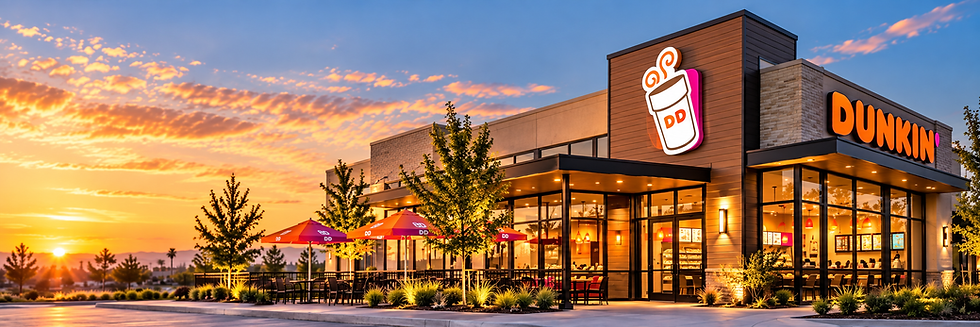
How Do I Sell My Dunkin’ Triple Net (NNN) Property?
If your goal is to achieve the strongest possible sale price for a Dunkin’ Triple Net (NNN) property, the strategy should begin by positioning the asset correctly and exposing it to the broadest appropriate pool of qualified buyers. Mercedes Shaffer and Highwater Partners combine sophisticated property, lease, tenant, guarantor, and valuation analysis with strategic pricing, national NNN and 1031 exchange buyer outreach, traditional commercial real estate marketing, and Mercedes’ direct investor-facing presence through The Commercial Real Estate Deal Room on YouTube. Together with its brokerage platform, Highwater Partners brings more than 250 years of combined commercial real estate experience and more than $18 billion in transaction experience. For Dunkin’ properties, franchise credit, lease term, drive-thru functionality, and underlying real estate can materially influence the sale strategy.
A strong sale outcome requires more than attaching a recognizable tenant name to a cap rate. Dunkin’s current franchise materials emphasize franchisee-operated restaurants and flexible real estate formats, while Inspire Brands’ development materials describe formats including freestanding, endcap, inline, and other configurations, often with drive-thru access as an important site characteristic. For sellers, that means the actual franchisee, lease guarantor, property format, access, site quality, and residual real estate should be understood before the asset is marketed.
What Will Buyers Evaluate in My Dunkin’ NNN Property?
Buyers will evaluate the complete investment, not simply the Dunkin’ sign on the building. A useful framework is Brand → Guarantor & Lease → Income → Location → Underlying Real Estate, followed by Marketing & Buyer Exposure as the seller-side factor that determines how effectively those strengths reach qualified investors.
Dunkin’ benefits from broad consumer recognition, but brand recognition and lease credit are not the same thing. Dunkin’s U.S. franchise development materials describe its restaurants as franchisee-owned, making it particularly important for a property owner to identify the actual legal entity obligated under the lease and determine whether another entity provides a guaranty.
A sophisticated investor may therefore ask whether the tenant is a single-location entity, an experienced multi-unit operator, or another franchise structure; what entity guarantees the rent; and whether assignment or other lease provisions could alter that credit profile. These questions can influence financing, buyer confidence, pricing expectations, and which investor groups are appropriate targets.
Buyers will also analyze the site independently of the tenant. Two Dunkin’ properties with similar rent and remaining lease term can produce very different market reactions if one has excellent access, visibility, drive-thru circulation, and alternative-use potential while the other has physical or location constraints.
How Does the Dunkin’ Franchise Structure Affect My Sale?
The franchise structure makes identification of the actual tenant and guarantor one of the most important steps in preparing a Dunkin’ property for sale. The recognizable brand may generate initial investor interest, but the lease documentation determines who is legally responsible for the income buyers are purchasing.
A strong multi-unit operator may be underwritten differently from a smaller single-purpose entity. Likewise, a guaranty from one company is not automatically equivalent to a guaranty from another simply because both locations operate under the Dunkin’ brand.
Before marketing, the seller should review the signed lease, amendments, assignments, guaranties, estoppels when available, and any other documentation that clarifies the legal and economic obligations. The objective is to anticipate the questions a buyer or lender will ask rather than allowing uncertainty to emerge after an offer has been accepted.
The tenant-credit story should also influence marketing. A property with a straightforward, well-documented guaranty may appeal to one group of investors, while a location requiring more nuanced franchisee analysis may be better targeted to experienced private investors or net lease buyers comfortable evaluating operator-level credit. A sophisticated strategy does not hide those differences; it explains them clearly and positions the property for the buyers most likely to value it appropriately.
How Do the Lease and Rent Affect a Dunkin’ Property Sale?
The lease can materially influence pricing, financing, buyer demand, and timing because investors are buying contractual income as well as physical real estate. Remaining firm term, rent increases, option periods, landlord obligations, assignment rights, termination provisions, purchase options, rights of first refusal, and other lease terms all deserve attention before the property reaches the market.
Firm lease term should be distinguished from tenant renewal options. Ten years of contractual term remaining is economically different from a shorter firm term followed by several optional periods that the tenant may or may not exercise. That distinction can influence lender underwriting and the amount of renewal or re-leasing risk a buyer perceives.
Contract rent also needs context. Scheduled rent increases may provide visible income growth, while extended flat-rent periods create a different underwriting profile. Buyers may also compare contract rent with current market rent to evaluate whether the income appears sustainable and what the property could earn if the existing tenancy eventually changes.
Owners who are uncertain how these elements translate into pricing can review how Triple Net properties are valued. The seller’s objective is not to reduce the property to one cap-rate calculation but to present the lease economics together with the guarantor, location, financing profile, and real estate.
Why Does the Drive-Thru and Underlying Real Estate Matter?
The underlying real estate can be a major part of a Dunkin’ investment thesis because buyers want to understand what they would own if the existing tenant eventually left. Drive-thru functionality, access, visibility, traffic patterns, site layout, frontage, parking, and alternative-use potential can therefore affect investor perception independently of the current rent.
Inspire Brands’ franchise development materials describe Dunkin’ freestanding locations as generally designed around drive-thru functionality and emphasize attributes such as strong morning traffic, corner or near-corner visibility, easy entry and exit, and vehicle stacking. The same materials also describe endcap and inline concepts, illustrating that Dunkin’ occupies more than one type of commercial real estate.
For a freestanding site, investors may analyze drive-thru lanes, stacking capacity, ingress and egress, parcel size, signage, zoning, surrounding retailers, traffic generators, and adaptability for another coffee, beverage, QSR, or service user. Good real estate can provide a second layer of value beyond the existing lease.
Endcap and inline properties require different analysis. Buyers may focus more heavily on the larger center, co-tenancy, anchors, shared parking, visibility, access, surrounding tenant mix, and the overall strength of the retail node. A Dunkin’/Baskin-Robbins combination or other specialized configuration may introduce still different considerations regarding building layout and future reuse.
Owners can review Highwater Partners’ guide to selling QSR Triple Net (NNN) real estate for a broader explanation of why restaurant and drive-thru properties should be evaluated as both income investments and physical real estate.
How Should a Dunkin’ NNN Property Be Positioned and Marketed?
A Dunkin’ property should be positioned around the characteristics most likely to matter to its realistic buyer pool: actual guarantor, lease duration, rental growth, property format, location quality, financing profile, and residual value. National marketing matters because the investor who values those characteristics most highly may not be located near the property.
Dunkin’s flexible real estate formats can appeal to different investor groups. A freestanding drive-thru with strong access and long contractual term may attract buyers seeking passive Single-Tenant Net Lease real estate, while an inline location may appeal to investors who place greater weight on the strength of the shopping center and surrounding trade area.
1031 exchange buyers are particularly relevant because many search nationally for replacement properties that satisfy specific income, timing, financing, and risk requirements. A seller who limits exposure to a local audience may therefore miss capital actively seeking NNN investments elsewhere in the country.
Highwater Partners’ marketing strategy combines national investor outreach, commercial listing exposure, broker relationships, professional property presentation, and targeted contact with NNN and 1031 exchange buyers. Mercedes Shaffer’s investor-facing educational presence provides another way to remain connected to an audience already engaged with net lease investing, lease risk, valuation, and passive commercial real estate.
When Should I Sell My Dunkin’ NNN Property?
The appropriate time to sell depends on the individual lease, tenant, property, and owner objectives. Remaining term, upcoming options, scheduled rent increases, anticipated tenant decisions, property condition, possible capital needs, changes in the trade area, and financing conditions can all alter marketability.
Waiting is not automatically better. If a property has substantial firm term today, allowing that term to decline may eventually narrow financing options or cause buyers to place greater weight on renewal risk. Conversely, an upcoming contractual increase or another favorable lease event may improve the income story in certain circumstances.
Owners should also consider physical real estate events. Road changes, new retail development, access improvements, competing construction, deferred maintenance, or property upgrades can influence how buyers perceive a site.
Before deciding, sellers can review when it may make sense to sell a Triple Net property. The objective is to choose timing strategically rather than simply waiting until the owner is ready to exit.
What Triple Net (NNN) Sellers Often Miss
One of the most important issues Dunkin’ property owners can miss is the distinction between the brand and the lease guarantor. Dunkin’ may be highly recognizable to consumers, but an investor still needs to know precisely which entity owes the rent and what financial support stands behind that obligation.
Sellers also sometimes combine firm lease term and renewal options when describing lease duration. Buyers generally distinguish the contractual term already committed from future periods controlled by the tenant, and that distinction can influence both pricing and financing.
Drive-thru configuration is another area that deserves careful attention. Dunkin’s own development materials emphasize access, visibility, morning traffic, drive-thru functionality, and stacking in several of its real estate formats. These characteristics may contribute to current tenant utility and future replacement-tenant demand, so they should be documented and incorporated into the marketing story.
Finally, sellers may underestimate the importance of buyer geography. A local investor is not necessarily the buyer who will place the highest market-supported value on the property. Specialized NNN investors and 1031 exchange buyers routinely evaluate assets across state lines, making broad qualified exposure an important part of protecting seller leverage.
Bottom Line
Selling a Dunkin’ Triple Net property successfully requires more than marketing a recognizable tenant. The actual franchisee and guarantor, lease term, rent economics, property format, drive-thru functionality, location, underlying real estate, and national buyer pool can all influence how the asset is valued and marketed.
Highwater Partners’ role is to analyze those factors, position the property around its genuine strengths, anticipate buyer objections, expose it to appropriate national investors, and preserve seller leverage from valuation through closing.
Frequently Asked Questions
How do I get the highest price for my Dunkin’ NNN property?
Pursuing the strongest market-supported sale price begins with understanding the complete investment: tenant and guarantor, remaining lease term, rental increases, lease obligations, location, property format, financing, and residual real estate. The asset can then be priced strategically and marketed nationally to the investors most likely to value those characteristics.
Does the Dunkin’ franchisee or guarantor affect what buyers will pay?
Yes. A buyer generally underwrites the entity legally responsible for the lease rather than relying exclusively on the consumer-facing brand. The size and financial profile of the franchisee, the existence and scope of any guaranty, and relevant assignment provisions can influence buyer confidence, financing, and the likely investor pool.
How much is my Dunkin’ NNN property worth?
There is no reliable value based solely on the Dunkin’ name or a generic cap rate. The guarantor, lease duration, rent schedule, location, property type, drive-thru functionality, landlord obligations, financing environment, and underlying real estate all contribute to market value and should be analyzed together.
Does the drive-thru increase the value of my Dunkin’ property?
Drive-thru functionality can be an important positive characteristic, but its value depends on the specific site. Buyers may evaluate access, stacking, visibility, traffic, ingress and egress, zoning, parcel configuration, and replacement-tenant demand rather than simply whether a drive-thru exists.
Do 1031 exchange buyers matter when I sell a Dunkin’ property?
They can represent a significant segment of the potential NNN buyer pool. Exchange investors often search nationally for passive replacement properties that meet particular income, lease, financing, location, risk, and closing requirements, which is one reason broad national marketing can be valuable.
Should I sell before my Dunkin’ lease gets shorter?
It is worth evaluating the sale strategy before the firm lease term becomes materially shorter. A declining term can affect lender underwriting, buyer demand, renewal-risk perception, and pricing, although the best decision depends on the individual tenant, lease economics, property quality, and owner objectives.
Related Triple Net (NNN) Resources
Owners deciding how to approach a sale can review how to choose a Triple Net (NNN) broker and consider the importance of lease analysis, franchise-credit evaluation, national investor exposure, commercial real estate marketing, negotiation strategy, and transaction execution.
Let’s Connect
If you are considering selling a Dunkin’ NNN property, a confidential valuation and positioning discussion can help clarify how the market may view the tenant and guarantor, lease economics, property format, drive-thru site, residual real estate, timing, and likely buyer pool. Highwater Partners can help analyze those variables and develop a national marketing strategy before you decide when and how to bring the property to market.
About Mercedes Shaffer
Mercedes Shaffer is the Founder of Highwater Partners, a commercial real estate advisory firm specializing in Triple Net (NNN) investments, 1031 exchanges, multifamily investment properties, and single-tenant net lease real estate throughout the United States. Together with her brokerage platform, her team brings more than 250 years of combined commercial real estate experience and more than $18 billion in transaction experience.
Mercedes advises private investors, family offices, developers, and institutional investors on the acquisition, disposition, valuation, and exchange of investment real estate. Her expertise includes tenant credit analysis, lease structure, cap rates and valuation, 1031 exchange strategy, market and location fundamentals, and the evaluation of risk in Triple Net investments.
In addition to her advisory work, Mercedes is also the creator and host of the Commercial Real Estate Deal Room, an educational platform focused on helping investors understand Triple Net real estate, 1031 exchanges, lease and tenant risk, valuation, and the transition from management-intensive properties into more passive real estate investments.
Mercedes is known for an analytical approach that goes “beyond the cap rate” and the glossy brochure. Rather than evaluating an investment solely by its advertised yield or the name on the building, she examines the tenant, lease, underlying real estate, market fundamentals, exit strategy, and the investor’s broader objectives.
Her philosophy is straightforward: there is no universally “best” Triple Net property—only an investment whose combination of real estate, income, risk, and long-term strategy may or may not be appropriate for a particular investor. That perspective guides her work across acquisitions, dispositions, 1031 exchanges, and long-term investment strategy.